More US Beef Plants May Close as Cattle Herds Keep Tightening
American beef plants are under threat as the number of cattle destined for their facilities stays far below historical levels, reflecting the smallest herd in more than half a century.
Cattle placed in US feedlots, where animals are fed until ready to be slaughtered, are expected to have dropped in November to the lowest levels for the month since 2015, according to a Bloomberg survey of analysts. The data, to be announced later Friday by the US Department of Agriculture, comes after cattle placements for October — typically the strongest month — were at the lowest level on record for the period.
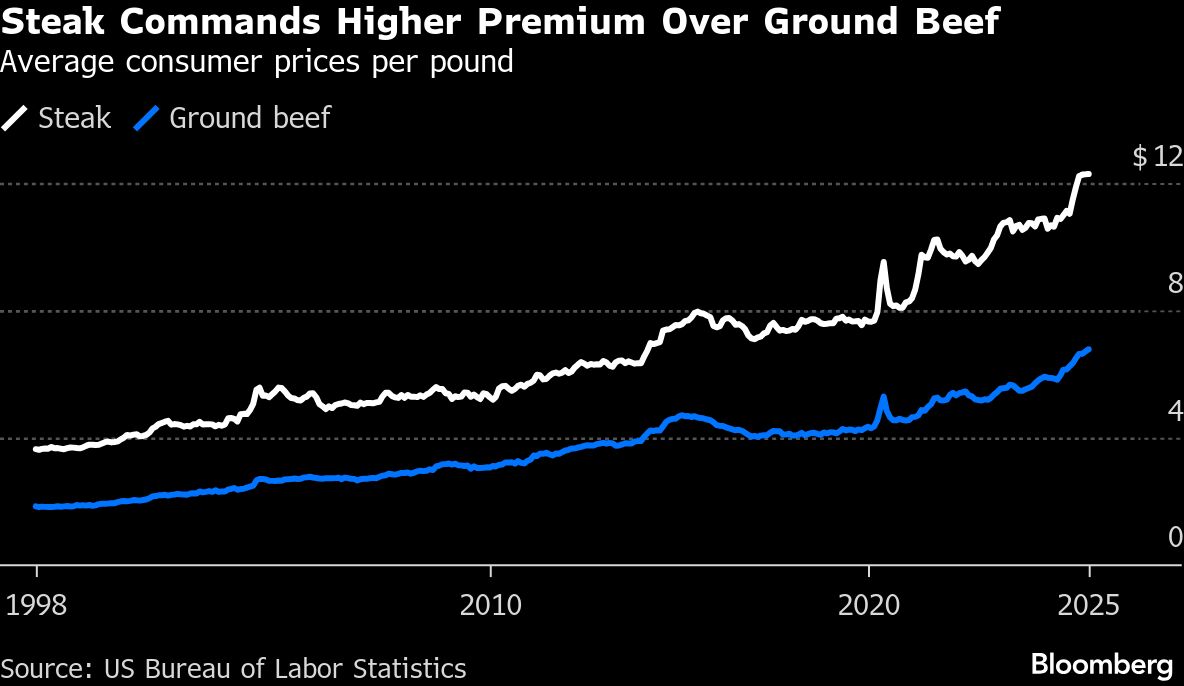
The situation, exacerbated by an ongoing halt of Mexican cattle shipments to prevent the spread of the deadly screwworm pest, is a major stress for beef processors that are operating at losses. It’s also setting the slate for more expensive American steaks for longer, complicating President Donald Trump’s efforts to bring down record beef prices.
Tyson Foods Inc., the country’s biggest meatpacker, underscored the difficulties for the industry last month as it announced it would close Nebraska beef plant and reduce operations to one shift at a facility in Texas roughly 450 miles from the Mexican border.
At least one other big plant and several more regional ones could close in the next 18 months as a result of the ongoing supply pressures, said Hyrum Egbert, an expert who has worked in the beef industry for nearly two decades. The pressures are likely to be more pronounced in the South, where plants typically source some live cattle from Mexico, but “I don’t think that anybody is exempt from it right now,” he said.
The Trump administration has been tackling record beef prices with a bevy of actions, including the recent lifting of steep tariffs on Brazilian shipments. Yet even as beef imports are projected to jump 15% this year to satisfy American’s appetite for the protein, they still only account for about 17% of the country’s supply, according to the US Department of Agriculture. And most of those supplies are lean trimmings that get blended with US meat for ground beef.
That’s why many see the southern border as key to bringing down the price of steak, as shipments from Mexico would involve live cattle.
When talking about cuts of meat other than ground beef, “that’s going to require the opening of the southern border,” said Darin Parker, president of meat distributor PMI Foods. Removing the ban is “a consequential move the administration could make,” he said.
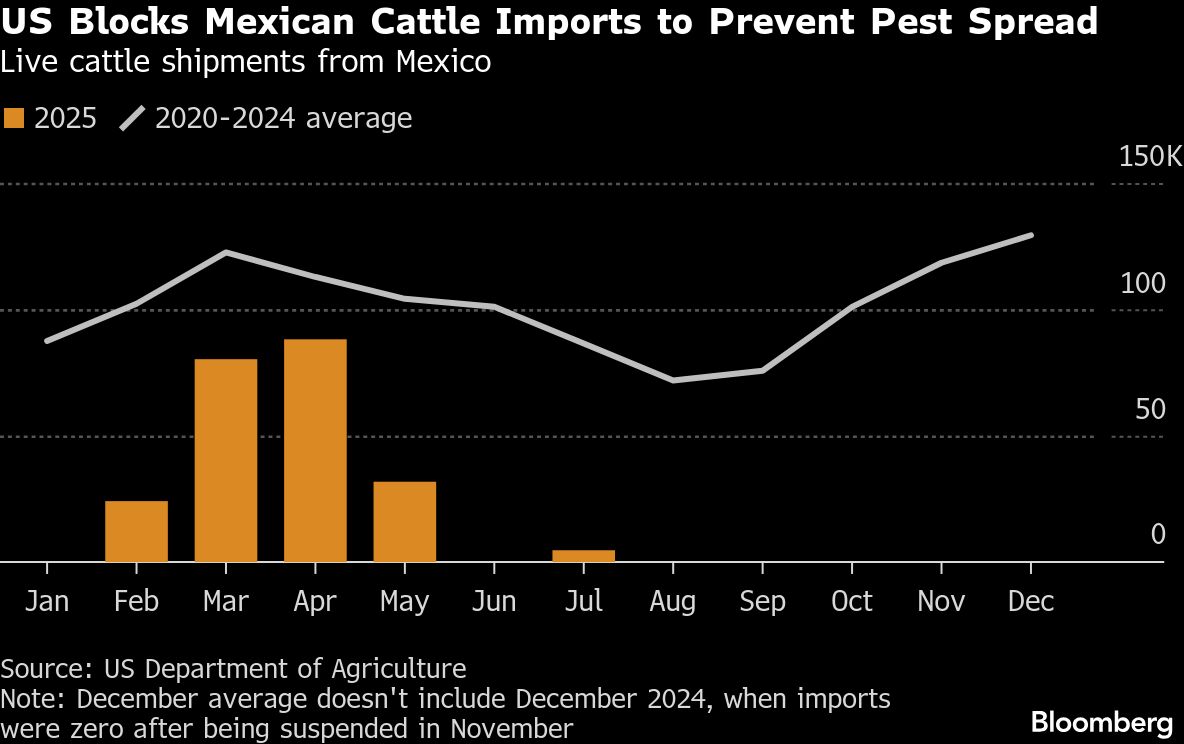
Livestock shipments from Mexico, where the screwworm was first detected a year ago, have been blocked since July following on-and-off halts that began in November 2024. That has prevented the spread of a pest that can kill cattle within days and once ravaged the US industry before being eradicated decades ago. Three cases of screwworm have been detected in the state of Nuevo León in northern Mexico since September, according to the USDA.
The agency continues to lead an aggressive response to the screwworm on both sides of the border, a USDA spokesperson said. “While we are making tremendous progress, there is still work to be done.”
The US Food and Drug Administration earlier this year conditionally approved the first drugs to prevent and treat screwworm in cattle, a Zoetis Inc. injectable drug and a Merck Animal Health topical solution.
Agriculture Secretary Brooke Rollins said in an an interview with CNN last month that the “main driver” of higher beef prices is the issue of Mexican live cattle shipments and the size of the US cattle herd. As the agency moves “back into a positive territory” in containing the pest, “the ports will eventually open back up” and prices will come down, she said.
Others contend that imports — while important — aren’t the main issue for helping American consumers. “It’s not the silver bullet to addressing the cost of beef in America,” Nate Rempe, chief executive officer of Omaha Steaks International Inc., said on Bloomberg Television in late November. “Rebuilding that herd is the inevitable requirement for bringing supply up, and that is not a fast process.”
In Texas, ranchers are still caring for some cattle shipped from Mexico when the border was open, but “those numbers are dwindling pretty fast,” said Laphe LaRoe, chairman of the Texas Cattle Feeders Association. He estimates those supplies will be nearly depleted by the end of the first quarter, putting even more pressure on feedlot operators and meatpackers.
Meat processors have been bidding up prices in order to secure the minimum supplies to keep operating. Tyson’s plant move, particularly in Texas, “clearly recognizes the impact from the shortfall in supply,” said Altin Kalo, chief economist at Steiner Consulting Group.
Photo: Empty corrals at the Union Ganadera Chihuahua cattle import facility in Santa Teresa, New Mexico in June.